Rapid advances in digital HR have shaken up and transformed the way performance management works. AI today is enabling data-driven performance reviews. Yet how do we balance the role of the human manager with the AI-powered tools? How do we seek the balance between human intuition and machine-driven data insights?
AI is now trending worldwide across organisations big and small as each take up arms for the digital revolution, but are we forgetting the people within the organisation? Do they have the skills and competencies needed to handle AI in the workplace?
On 3rd July, dcHR.tech was unveiled at a gathering of friends, tech partners and clients. It was a dizzying moment – both of excitement and to a large extent, adrenaline-sustaining tiredness. We are so glad that we were able to share our joy with our HR tech partners - Enboarder, Panalyt, Synergita, Kaltura, Comaea, EngageRocket, SelfDrvn, and impress.ai. Thank you for your willingness to spend the momentous occasion with us! It was spectacular that Grab was there too to share about their amazingly heartfelt employee onboarding stories.
Artificial Intelligence (AI) is the science of simulating human intelligence at a processing power and speed of machines. It is expected to change our lives in more ways than we can imagine. Some fear that it will eliminate jobs - tasks done by humans will be replaced by machines. We believe that it is upon us. We could consider it as a foe and eliminate it or consider it as an enabler and make it our ally.
Every organisation has a DNA - it's about your cultural strength that points to your greatest assets. Knowing your DNA gives you a competitive edge and impacts the success of your transformation journey.
Navigating the world of tech transformation can be a tricky one. There are no set definitions on what it means for employees, organisations – and especially for HR, who has been tasked to guide people through this massive shift in the way we work. DecodeHR understands how overwhelming this task can be for leaders driving change in their organisations and shared with HRD that prepping ahead of any transformation project is a must to improve your chances of success.
Artificial Intelligence, aka AI, is an increasingly bandied about term as we move into the digital era. But what is AI exactly? Here at DecodeHR, we like to define it as a “medium” to simulate the capability of thinking like humans but with the processing power and speed of machines. With AI, productivity rates have the possibility of surging through the roof as what would normally take hours for a human mind to sieve through can now be processed in seconds.
At the HR Tech Summit, the DecodeHR team met many like-minded individuals, all united in the goal of finding out how technology can be leveraged to strengthen their human capital. We connected with HR tech vendors and experts to hear how technology can be applied effectively to HR. With tech innovations hitting workplaces constantly, there’s never been a better time for us in the HR space to analyse what the future of the workplace holds for us.
Businesses wanting to remain competitive in today’s economy need to look at ways to incorporate artificial intelligence (AI) for HR processes. AI enables businesses to be more efficient and effective and therefore at the top of their game. For this reason, DecodeHR works with clients to develop their HR tech strategy and augment human capital solutions with AI.
Digital disruption is creating new opportunities for innovation with technology. A combination of market forces, competitive forces and technological forces are responsible for the disruption. Top tech trends in HR range from robotic transformation automation (RPA), HR analytics, workforce planning and optimisation, talent management and learning and development.
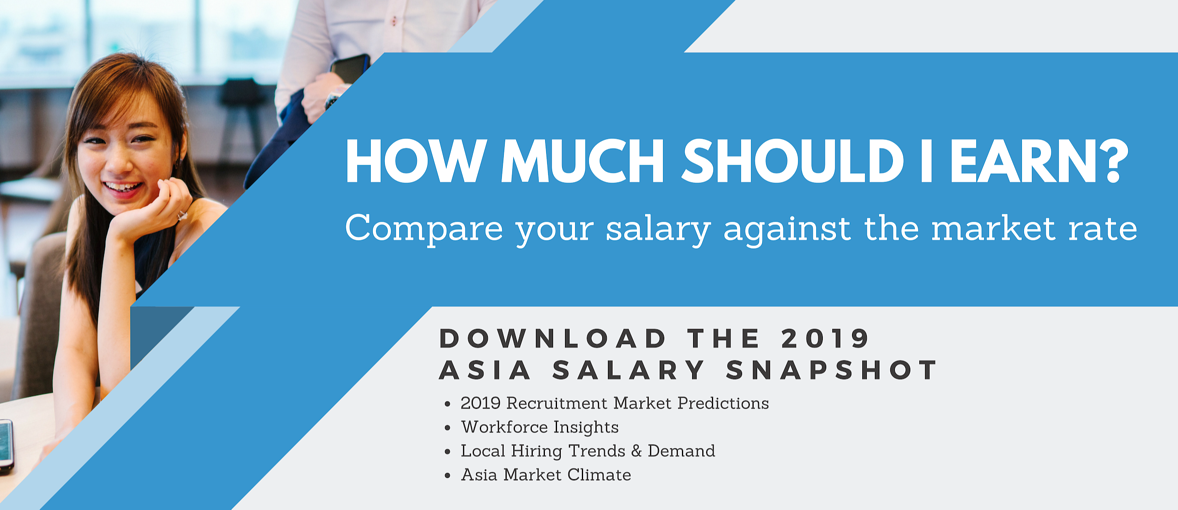
What should you earn? Learn about the Asian market rate and make the most out of 2019.
Looking for a pay raise but don’t know how? Don’t sweat, with the Links 2019 Asia Salary Snapshot, you can easily compare your salary with the market rate and calculate the salary you should be getting.
Technology, globalisation and an increasingly diverse workforce has created an environment where change is the only constant. Businesses are now forced to get ahead of such disruptions or be left behind. Unfortunately, we often see the latter due to how subtle disruptions can creep up. Increasing your organisation’s ability to compete is thus crucial in this day and age – and competency frameworks may just be the edge you need.
For years, talent managers have followed the lead of their marketing counterparts in the race for engagement. Similar to how marketers focused on getting likes and comments on Instagram, many HR professionals have taken to measuring to what extent employees feel a personal bond to their company.
We understand that praise has its benefits in motivating people. However, when done badly they can become a stress or for the people who receive it, choking them up on current tasks and also affecting them down the line. A lot of the time, what many consider praise is really more of a comparison, stacking people against each other.
Many leading brands, like Google, Grab and Facebook, have been featured for their successes in injecting a start-up culture to make work a fun and enjoyable place for employees. Others have since tried to emulate their successes by re-designing work spaces and offering benefits like free food, office games, paid outings and chilling areas. In fact, a recent study by Sage revealed that 40% of business owners believe that such benefits are important to employees.
With almost half of the local population thinking about leaving their current jobs within the next year, it is time for us to evaluate how effective we have been in engaging our own employees. After all, if people are spending 50% of their waking time at work, then a department dedicated to ensuring people are happy and productive at work should be taking a prominent place in the organization. The next question would then be: how can your HR team be genuinely human-centric and focus on taking care of real people needs. Or has some become ‘transaction’ processing machines? How can HR get out of this quandary?
A collaboration-based performance management framework has the power to positively transform your performance appraisals. By learning the tools of performance management, you will gain a better understanding of your employees and their career aspirations, for a start. The framework sets out the steps to optimise your goals, through helpful techniques and processes such as two-way feedback and constant alignment.
Agile way of working, agile organization, Scrum, squads, Holacracy, whatever it’s called in your organization and whatever the shape it takes: working in a new way requires a new leadership style. In a series of articles, I will take you on a journey through the subject of leadership in agile organizations.